
Ren Omakase in Menlo Park
 1K+ Views
 100+ Likes
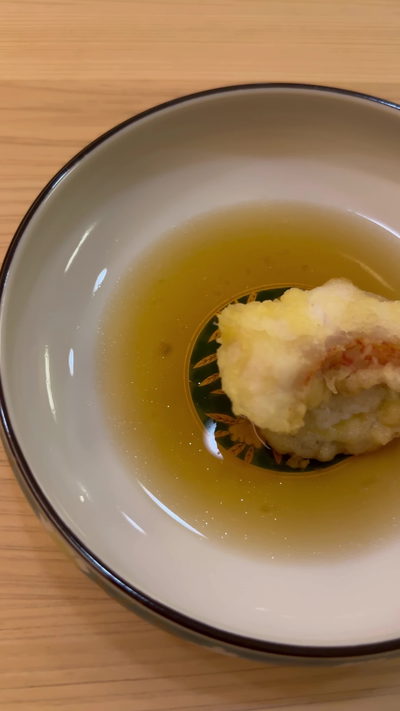
The video presents a close-up, static shot of a single piece of tempura submerged in a light brown dipping sauce, displayed in a simple bowl. The focus is entirely on the food, highlighting the crispy texture of the battered item and the glossy surface of the sauce. There is no visible human presence, background context, or signage, and the camera remains fixed throughout the 7-second clip. The scene is minimalist, emphasizing the visual appeal of the dish without any narrative, audio, or environmental cues. The content is purely focused on the aesthetic and sensory qualities of the food, with no indication of a restaurant, cooking process, or viewer action beyond observation.
 1K+ Views100+ Likes
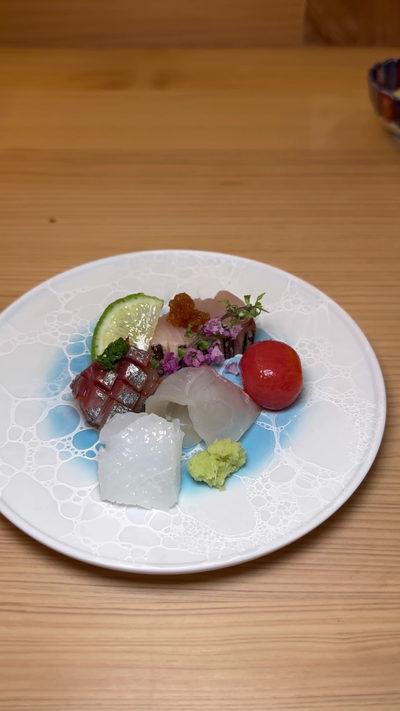
The video presents a meticulously composed shot of a sushi platter on a light wooden table, featuring an array of nigiri and sashimi arranged with artistic precision. The dish is garnished with a lime slice, a small mound of wasabi, and a cherry tomato, enhancing its visual appeal through contrasting colors and textures. The lighting is soft and natural, highlighting the freshness and craftsmanship of the sushi. The composition emphasizes the food as the central focus, with clean lines and a minimalist background that avoids distractions. There is no audio present, and no human presence or contextual cues such as signage, restaurant interiors, or customer interaction are visible. The shot is static, with no movement or dynamic editing, and appears to be a single, carefully framed still image with subtle zoom or focus adjustments, suggesting a photo-based or high-end food photography style.
 1K+ Views100+ Likes
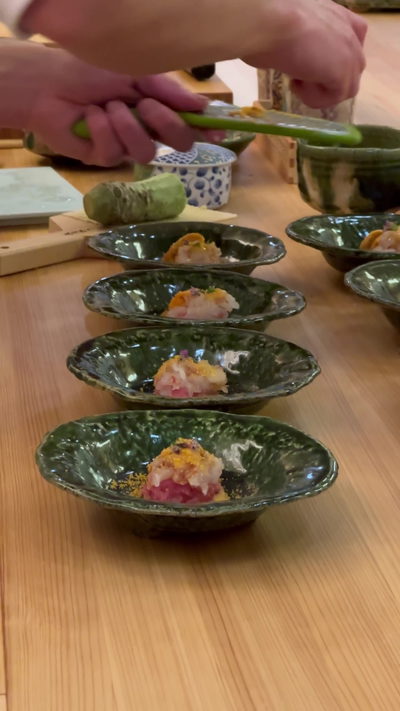
A chef prepares a dish in a professional kitchen, focusing on the precise plating of a fish topped with a pink sauce and garnished with green herbs. The video captures close-up shots of the chef's hands, emphasizing technique and attention to detail, set against a background of kitchen utensils and ingredients. The scene conveys a high level of culinary craftsmanship and aesthetic presentation.
1K+ Views100+ LikesThe video presents a close-up, static shot of a single piece of tempura submerged in a light brown dipping sauce, displayed in a simple bowl. The focus is entirely on the food, highlighting the crispy texture of the battered item and the glossy surface of the sauce. There is no visible human presence, background context, or signage, and the camera remains fixed throughout the 7-second clip. The scene is minimalist, emphasizing the visual appeal of the dish without any narrative, audio, or environmental cues. The content is purely focused on the aesthetic and sensory qualities of the food, with no indication of a restaurant, cooking process, or viewer action beyond observation.
1K+ Views100+ LikesThe video presents a meticulously composed shot of a sushi platter on a light wooden table, featuring an array of nigiri and sashimi arranged with artistic precision. The dish is garnished with a lime slice, a small mound of wasabi, and a cherry tomato, enhancing its visual appeal through contrasting colors and textures. The lighting is soft and natural, highlighting the freshness and craftsmanship of the sushi. The composition emphasizes the food as the central focus, with clean lines and a minimalist background that avoids distractions. There is no audio present, and no human presence or contextual cues such as signage, restaurant interiors, or customer interaction are visible. The shot is static, with no movement or dynamic editing, and appears to be a single, carefully framed still image with subtle zoom or focus adjustments, suggesting a photo-based or high-end food photography style.
1K+ Views100+ LikesA chef prepares a dish in a professional kitchen, focusing on the precise plating of a fish topped with a pink sauce and garnished with green herbs. The video captures close-up shots of the chef's hands, emphasizing technique and attention to detail, set against a background of kitchen utensils and ingredients. The scene conveys a high level of culinary craftsmanship and aesthetic presentation.

